

When Everyday Objects Become Extraordinary Design
Fresh Eyes on the Ordinary
Moving to a new city is exciting for many reasons, but for me, one of the best is discovering everyday objects that locals probably overlook because they’re so normal. Those mundane items that blend into the background of daily life suddenly become fascinating when you arrive with fresh eyes.
Barcelona was one of those places that offered this experience. A standard fruit crate. An everyday brick. A water barrel. A discarded newspaper. A scrap of fabric. Even a sheet of corrugated metal leaning against a construction fence.
To the locals, these are just… there. Functional. Ordinary. Part of the scenery they’ve stopped seeing.
To a designer new to the city, they’re treasure waiting to be reimagined.
Where Design Begins: The Overlooked Made Essential
This is where I like to start designing and making—with the things people have stopped noticing. There’s something profound about taking an object that’s fulfilled its original purpose, sometimes for decades, and asking: “What else could you become?”
Often, the results are surprising once the item is combined in a unique way and given a simple function. A lamp. A bowl. A side table. A clock. A coat hanger.
The transformation happens when you see past the object’s original purpose and recognize its inherent qualities—its shape, its texture, its material, its story—and imagine how those qualities could serve a completely different need.
The Hunt: Building Blocks from the Recycling Point
Digging around a local recycling point can offer up some wonderful “building blocks” for creating new pieces. Barcelona’s puntos verdes and streets are full of materials that most people see as waste, but that we see as raw potential.
The combination of reuse, recycle, and reimagine all start to weave together in creating a new piece. It’s not just about sustainability (though that matters deeply). It’s about recognizing that these materials already have character, patina, and stories that new materials simply cannot replicate.
Projects from Found Objects
Crate Lamps: Industrial Light
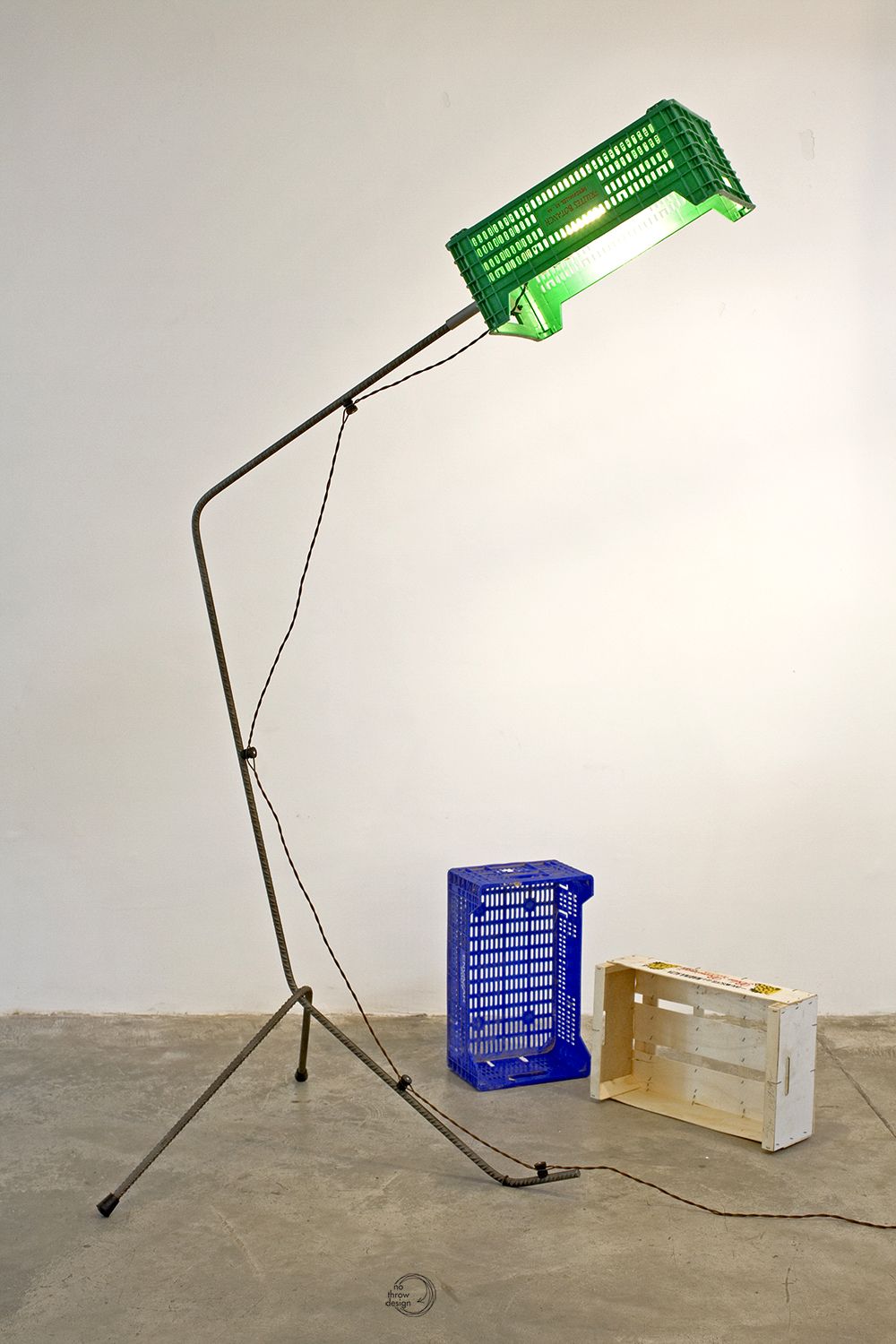
Those plastic fruit crates stacked outside every corner shop? When you look at them with fresh eyes, you see their geometric perfection—the grid of ventilation holes creating natural light diffusion, the structural integrity of the design, the bold colors that most people find garish but that we find honest and unapologetic.
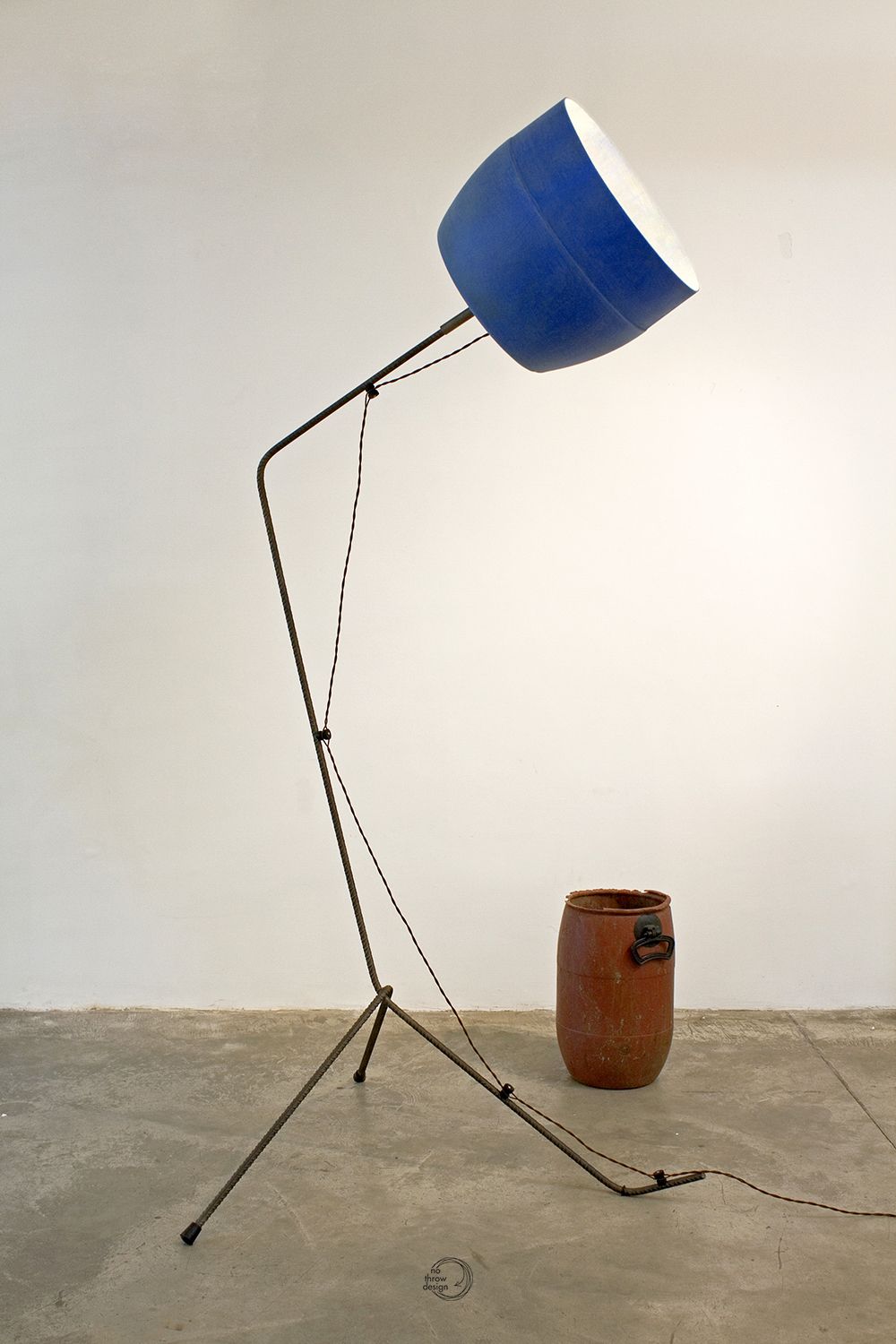
Fitted with proper electrical components and LED lighting, these crates become sculptural floor lamps with a stand, casting geometric patterns across walls and ceilings. The plastic that was designed to be knocked around in delivery trucks proves surprisingly beautiful when backlit.
Barrel Lamps: Material Memory
A weathered water barrel or wine barrel carries decades of service in its surface—dents, stains that tell stories of what it contained and where it traveled. Cut and shaped with care, fitted with lighting, these become pendant lamps or wall sconces that filter light through their weathered surfaces.
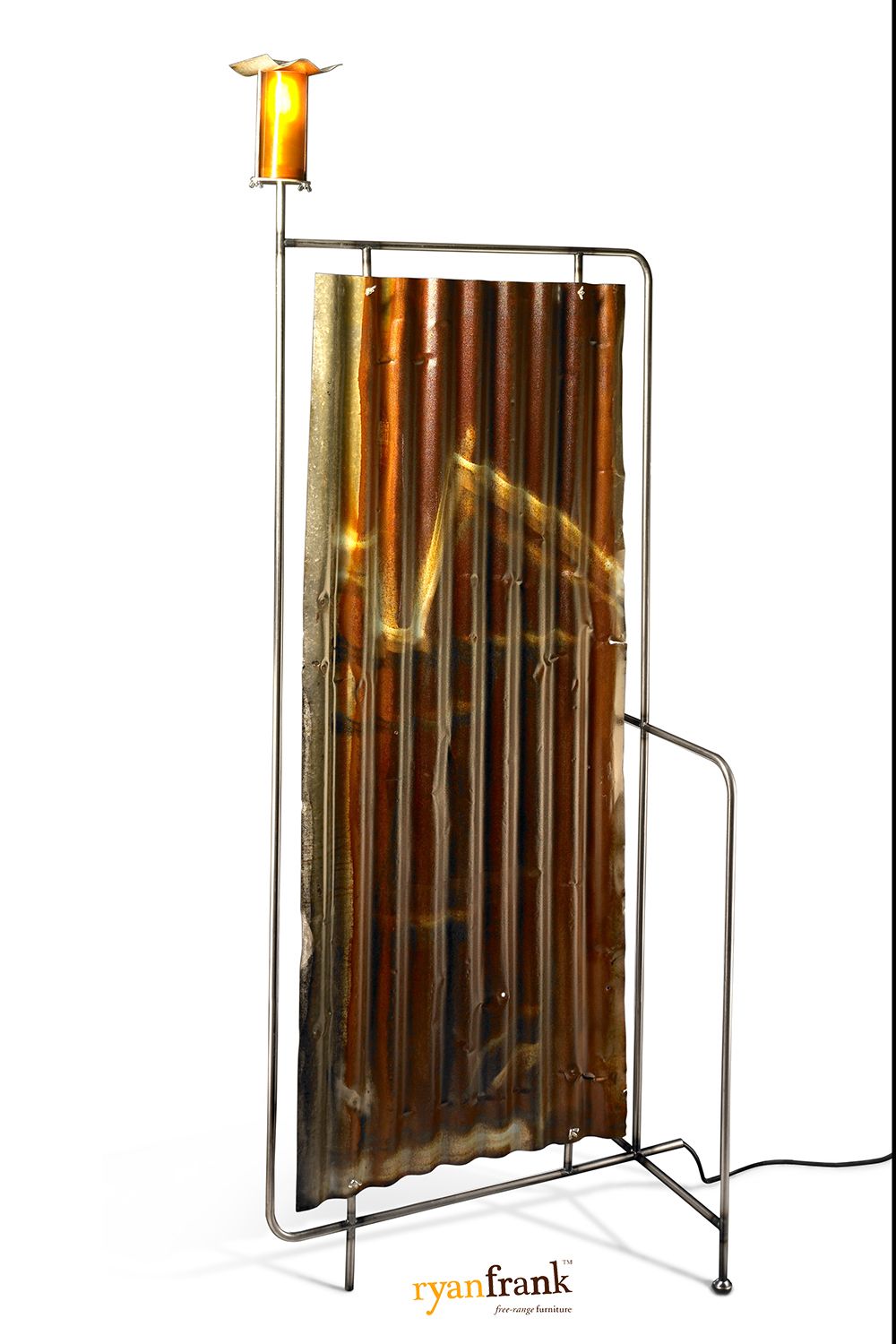
The rust on corrugated steel isn’t decay—it’s patina. It’s evidence of time, weather, and use. Why sand it away when it creates such beautiful, organic patterns that no artist could intentionally replicate?
The Brick Bowl: Reimagining Structure
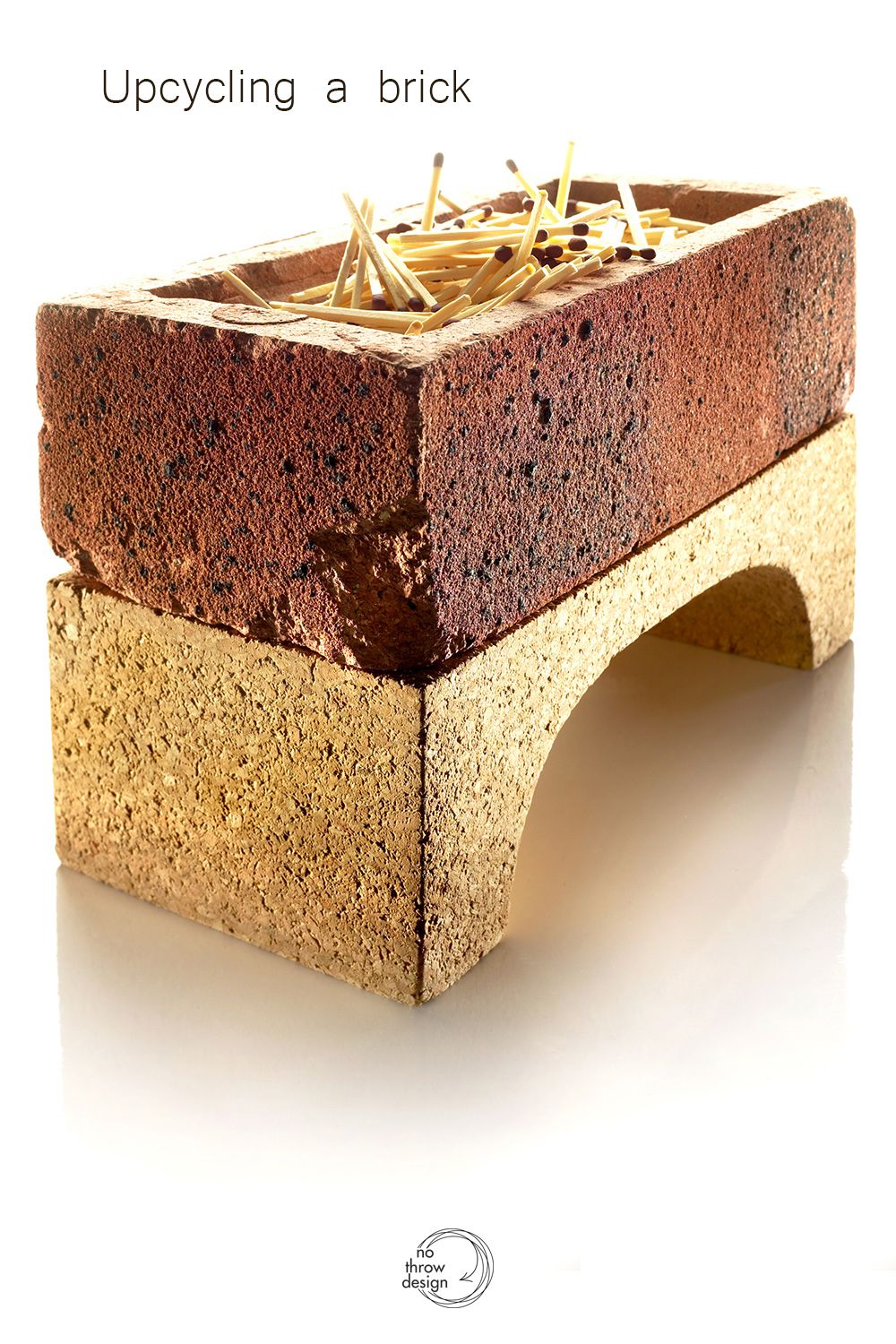
Take a standard Barcelona brick—terracotta fired from local clay, the kind that’s been stacking into buildings for centuries. What if instead of building upward, it became a bowl? A simple function, but the juxtaposition is delightful. Something meant to bear weight now holds fruit. Something designed to be hidden in walls becomes a centerpiece.
The brick’s texture, its weathering, its very brick-ness becomes the point. It’s honest about what it is, asking you to see familiar materials in unfamiliar contexts.
Rolling Table: Celebration of Asymmetry
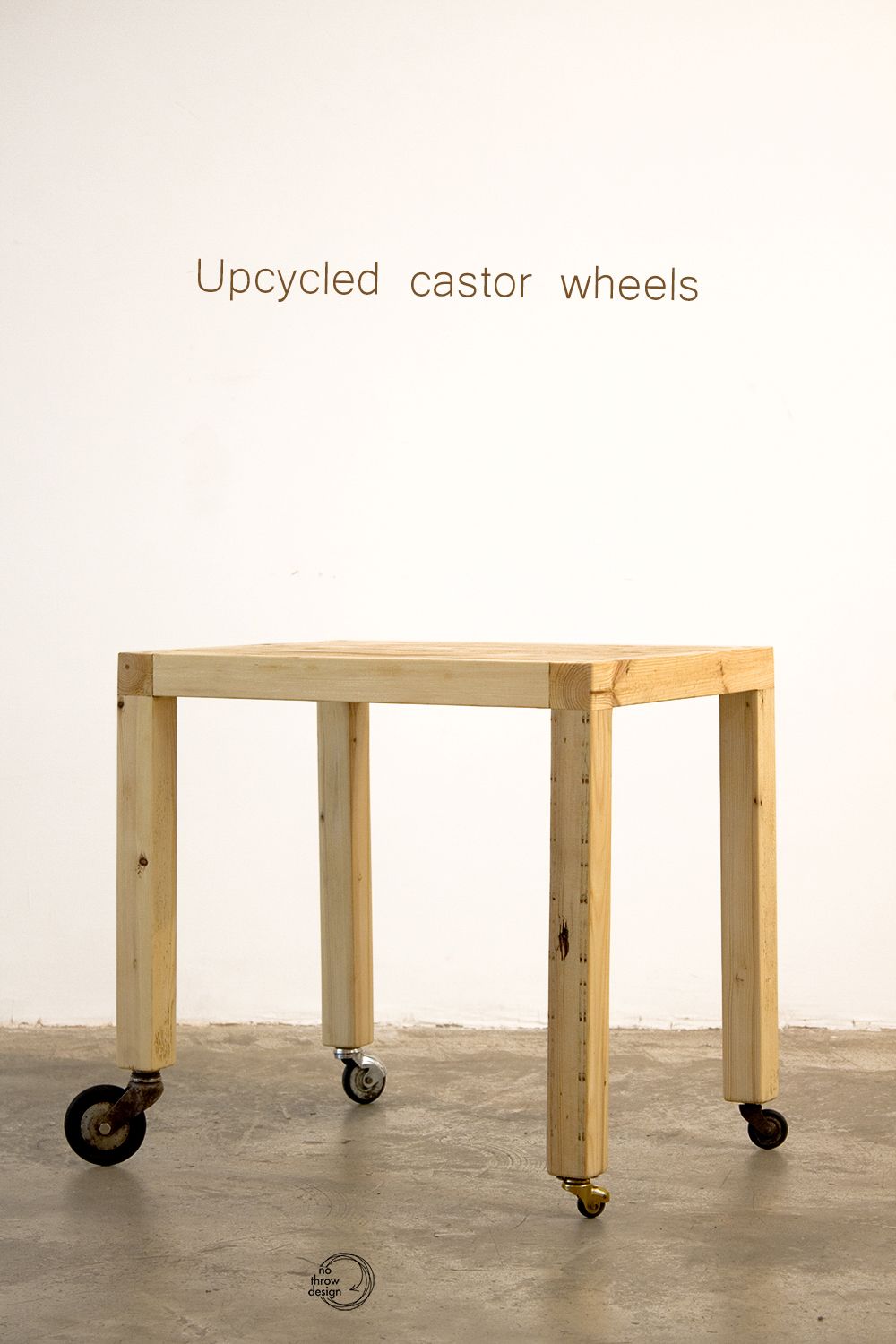
Most people would throw away a table with broken, mismatched castor wheels. We see it as an opportunity. Why do all four wheels need to be the same? What if the different heights create a slight tilt that’s actually interesting? What if the mismatched wheels—industrial rubber, vintage brass, modern plastic—become a design feature rather than a flaw?
This is furniture that rejects perfection in favor of character. It rolls a bit unevenly. It’s honest about being assembled from found parts. And that’s exactly what makes it interesting.
Newspaper Hangers: Yesterday’s News, Today’s Function
Vintage newspapers have incredible typography and layout that modern design has largely abandoned. The paper itself—slightly yellowed, with texture you don’t find in today’s newsprint—has a quality that photocopies can’t capture.
Shaped, layered, and treated to create rigid coat hangers, these newspapers get a second life. The text becomes pattern. The information becomes decoration. What was meant to be read once and discarded instead hangs in your closet for years, still legible, still beautiful, still telling stories from decades past.
Fabric Scrap Clock: Time Made from Scraps
Textile factories generate mountains of scraps—small pieces too small to sew, too irregular to use, printed with patterns that are slightly off-register or from discontinued runs. These scraps are usually burned or landfilled.
But layered and felted into a fabric and then cut to make a clock face, they create abstract compositions with depth and texture. Each clock is unique because the scraps are random. You can’t plan the exact composition—you work with what you find, arranging and rearranging until it’s right.
The End Result: Unique by Nature
The end result is always unique, as each found object has its scratches and marks that make it unrepeatable.
This isn’t artisanal pretense. This is literal fact. We can’t make two identical crate lamps because no two crates have weathered exactly the same way. We can’t make two identical brick bowls because each brick carries different marks from its century of service. In a world of mass production where everything is designed to be identical and replaceable, there’s something powerful about objects that are irreplaceable by their very nature.
The Locals Always Smile
It’s always refreshing to see the locals smile at seeing something they often overlook becoming a part in a product that no longer operates in what it was originally designed for.
There’s a moment of recognition—”Wait, is that a fruit crate?”—followed by delight. The double-take. The closer inspection. The questions about how it’s made, where we found it, whether we have more.
That smile is what tells me this work matters. Not just because it keeps materials from landfills (though it does). Not just because it’s handmade (though it is). But because it helps people see their city differently. It makes the everyday extraordinary. It proves that value exists in the overlooked if we’re willing to look closely enough.
When someone from Gràcia who’s walked past fruit crates every day for forty years suddenly sees one as beautiful, that’s when you know you’ve done something worthwhile. You’ve changed not just the object, but how people see their world.
Three Principles: Reuse, Recycle, Reimagine
Every piece we create follows three principles:
Reuse: We give materials a second life in a new form. That crate hauled produce. Now it lights your living room.
Recycle: When materials reach their end, we break them down thoughtfully and rebuild them into something new.
Reimagine: We don’t just repurpose—we transform. We ask what the material wants to become, what its form suggests, how its history can inform its future.
These three principles weave together in every piece, creating objects that are sustainable, yes, but more importantly, that are interesting. That have stories. That make you look twice at the everyday objects around you and wonder: “What else could that become?”
Designing for Longevity, Not Landfill
At noThrow Design, our philosophy is simple: we create products designed to spend more time in your home than in a landfill.
This means building with quality, using materials that age beautifully rather than deteriorate, choosing timeless aesthetics over trends, and being transparent about where materials come from and how pieces are made.
When you choose an upcycled piece, you’re saying that materials have value beyond their first use, that history deserves preservation, and that beauty exists in the everyday if we’re willing to look closely enough.
Commission Your Own Piece
Every city has its overlooked objects. Every material has a second life waiting to be discovered. If you’re drawn to design that tells stories, honors its origins, and stands against disposability, we’d love to work with you.
—
noThrow Design is a sustainable design collective based in Barcelona’s Gràcia neighborhood. We create handmade furniture, lighting, and home accessories using natural, recycled, and locally-sourced materials—all designed to last, not for landfill.